Predictable Process
Repeatable performance regardless of shift,
operator, or lot. (KPI: process variation reduced by ±X%)










We design and integrate custom assembly stations and special processes using Industrial Stability Engineering: we absorb complexity into the design, stabilize key parameters, and simplify operation for operators. Automation becomes a control mechanism, not compensation. Suitable when you face:

We design stations in which the process is intuitive, guided, and controlled, reducing dependence on operator experience and manual intervention.
We stabilize critical parameters and turn automation into a mechanism that prevents variation instead of correcting its consequences.

Fixtures designed for actual geometry and tolerances, ensuring repeatable positioning independent of the operator.
We define reference points and functional surfaces to eliminate unwanted movement without introducing parasitic stresses.

We perform kinematic analysis to systematically identify and eliminate sources of variation.

We design mechanisms that allow only one possible assembly position, reducing errors and ensuring correct alignment.

We design position/presence/alignment verification into every cycle before the critical operation.

We develop architectures that manage multiple variants without compromising positioning or repeatability.
Description: Integrated stations with rigid fixtures, parametric energy control, and cycle validation for consistent joints. Benefits: reduced scrap, assured weld quality, shift-to-shift repeatability, OK/NOK traceability.

Description: Systems with controlled dispensing (flow, temperature, time), pre/post-application verification, and variant management. Benefits: consistent adhesive quantity and placement, elimination of bonding defects, optimized adhesive consumption, and easy batch changeover.
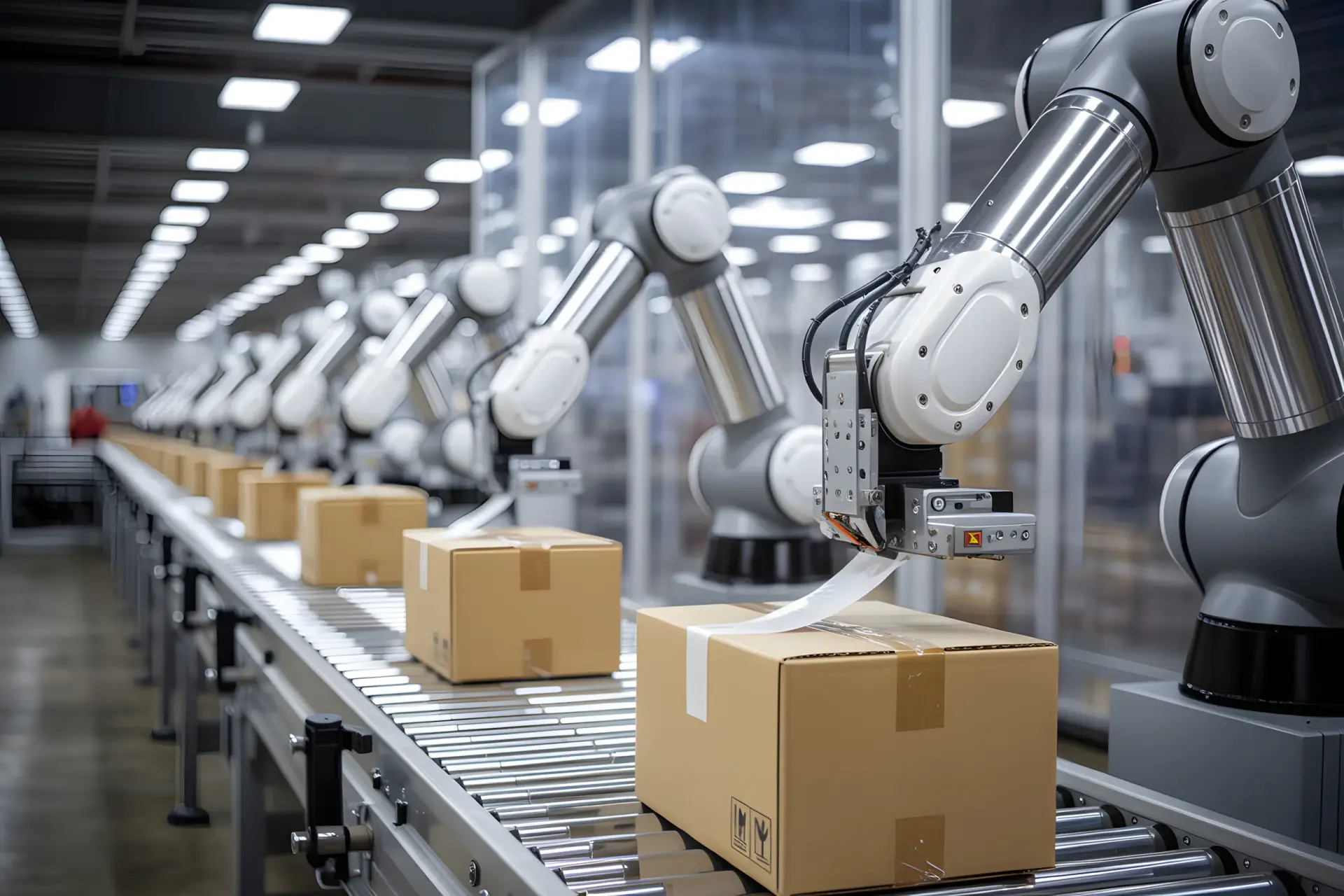
Description: Units with force–time–displacement control, in-cycle parametric validation, and positive-orientation mechanics. Benefits: guaranteed functional tolerances, elimination of “over/under-press”, reduced rework, and protection against part damage.

Description: Gripping and transfer solutions with servo control and scalable vacuum systems for precise handling of sensitive variants. Benefits: predictable positioning, optimized speed without loss of quality, easy integration with sensor-based verification, and increased throughput.
Repeatable performance regardless of shift,
operator, or lot. (KPI: process variation reduced by ±X%)

Eliminating variation at the source
reduces downstream corrections. (KPI: ↓ scrap % by 30–70%*)
Per-cycle validation and traceability for audit.
(KPI: 100% validated cycles / reporting time)
Performance maintained as throughput increases.
(KPI: throughput increase +10–40%*)
Mechanical constraints and automated validation reduce
human error. (KPI: ↓ assembly errors %)
Solid Foundation for Further Automation

We identify the real sources of instability (tolerance stack-up, incomplete constraints, operator dependence, shift-to-shift variation).

We establish what must be controlled, measured, and validated (KPIs, functional tolerances, OK/NOK limits) and plan the testing strategy.
We build calculated, rigid, and accessible fixtures and constraints for repeatable positioning without introducing parasitic stresses.
We synchronize mechanical actions and control logic (parametric, validated cycles) for predictable and safe execution.

We record process parameters and the results of every cycle for audit, root-cause analysis, and compliance.

Commissioning, testing, adjustment, and repeated validation until performance is repeatable under real conditions (multiple shifts, lot variants).
We provide monitoring, continuous optimization, and a maintenance plan to preserve long-term stability.
 Our projects
 Talk to an engineer